Saltar la navegación

What are you wearing?

What you should know

By the end of this section, you will be able to describe the clothes someone is wearing or the clothes he or she usually wears. It is a question of vocabulary and adjectives. That's why you have already learnt the names of clothes and the adjectives to describe them, colours, patterns, materials, etc.

Word order, please

Remember that, in English, adjectives go before the noun they describe. If you are talking about clothes, the adjectives you use to describe them (colour, pattern, etc.) must go before the noun.

Present Tenses

If you have to describe what clothes someone in front of you or in a photograph is wearing, use the Present Continuous, but if you want to say what kind of clothes this person usually wears, use the Present Simple.

I am wearing a blue T-shirt but I usually wear a shirt.

Here you have a Quizlet Unit with vocabulary you will have to use when describing clothes.


¿necesitas ayuda?

Al final de esta sección serás capaz de describir la ropa que alguien lleva puesta o la que suele ponerse habitualmente. Sólo es una cuestión de vocabulario y adjetivos. Por eso ya has aprendido los nombres de la ropa en inglés y los adjetivos que solemos utilizar para describirla: colores, estampados, tejidos, etc. 

Recuerda que en inglés los adjetivos van delante del sustantivo al que describen. Si estás describiendo una prenda de vestir, los adjetivos de color, forma, etc. van delante del sustantivo.

Además, si vas a describir la ropa de alguien que está contigo o que aparece en una foto, tienes que utilizar el Presente Continuo. Sin embargo, si hablas de la ropa que suele ponerse habitualmente, utiliza el Presente Simple.
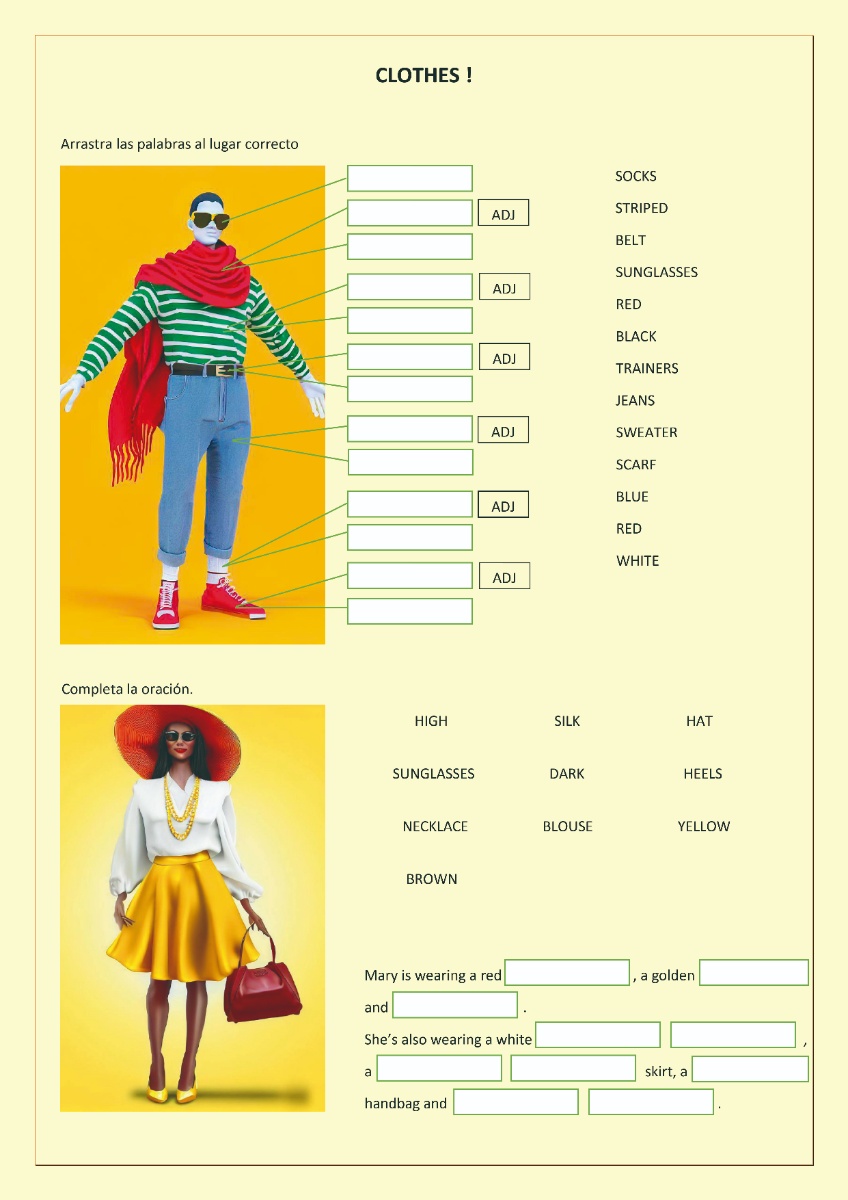
Explore!

Practise your vocabulary. Here you have a worksheet to revise the names of clothes and the adjectives to describe them. CLICK on the image (PULSA sobre la imagen).

Elaboración propia con LiveWorksheets (CC BY-SA)

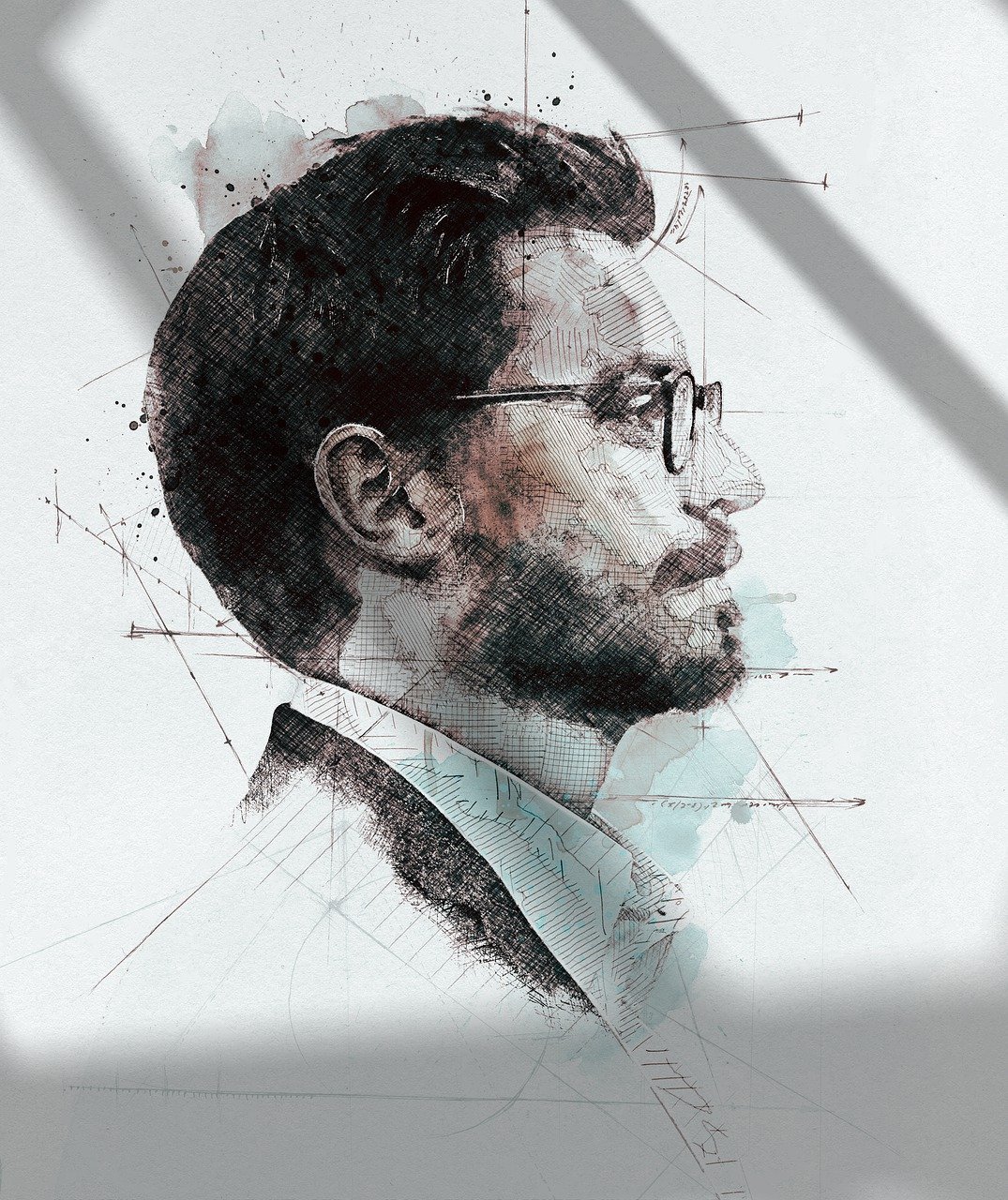
What are they wearing?

Layers. Bosquejo, Dibujado a mano y Hombre. (Pixabay)

A)   Michael is a man in his mid-thirties. He works in an office. He’s tall and has long, brown, wavy hair. He sometimes wears red glasses and he often reads books in the library. When he doesn’t read, you can sometimes find him in the gym. He likes to exercise two or three times a week. As he likes to exercise, he is slim, strong and healthy, with broad shoulders and a muscular build. He has bright green eyes and he has a small scar above his left eyebrow.

B)   Michael describes himself as self-confident and some people say he is a bit stubborn. He likes to be the leader, so he is quite ambitious, and sometimes he can be a bit aggressive. On the other hand, he is a good communicator and also a very funny and talkative person. He usually makes people laugh, so he has lots of friends. Michael has a big, friendly smile and people think he is a nice person.

C)   Michael usually wears casual clothes.  Now he is wearing a plain white T-shirt, dark blue jeans, and brown leather boots. The T-shirt is made of soft cotton, and it fits him well. Michael is also wearing a blue woollen sweater with a striped pattern. Michael's clothing is practical and comfortable, while still showing off his personal style.

2

Read the text about Michael. The text describes him and his clothes. Then download your "Reading Comprehension task" file and answer the questions.

You can download the text document with the "reading comprehension task" here (click) and save in your device, or print and write down your answers by hand. Then, either the case, write your answers and send it to your teacher in ".PDF" format. Convert your file using an online converter, such as online-convert (click).

This writing task will be evaluated according to the following checklist (click).

¿necesitas ayuda?

Lee el texto sobre Michael. Es una descripción completa: ropa, personalidad y físico. Descarga la tarea y responde a las preguntas. 

Puedes descargar el documento de texto con la "tarea de comprensión lectora" aquí (click) y guardarlo en tu dispositivo, o puedes imprimirlo y escribir tu descripción a mano. En cualquier caso, escribe tus descripciones y envíalas a tu profesor en formato ".pdf". Convierte tu archivo utilizando un conversor en línea como online-convert (click).

Esta tarea escrita será evaluada siguiendo la siguiente lista de cotejo (click).

My Learning Diary

Now that you have finished your "Reading Comprehension" activity, check what you have learnt by writing down your answers to the questions in your Learning Diary. Remember that you downloaded it in the "Let's Go!" section.

Write the answers to these questions about this section ("What are you wearing?") in your Diary.

1. Did you understand the main ideas in the text?

2. What did you find most difficult to do?

3. What was the most interesting thing you learnt?

4. Do you think you are ready to write a similar description?

¿necesitas ayuda?

Ya has completado tu segunda actividad. Es momento de retomar tu Diario de Aprendizaje y comprobar lo que has aprendido. Para ello, tendrás que responder a las preguntas sobre esta sección que encontrarás en tu diario. Recuerda que el Diario de Aprendizaje lo descargaste en la Sección "Let's Go!").

Escribe las respuestas a las siguientes preguntas sobre esta sección ("What are you like?")

1. ¿Has entendido las ideas principales del texto?

2. ¿Qué te ha resultado más difícil?

3. ¿Qué es lo más importante que has aprendido?

4. ¿Crees que estás preparado para escribir una descripción similar?

Creado con eXeLearning (Ventana nueva)